The Definitive Raja Ampat Diving Package Cost Guide: 2024/2025 Pricing
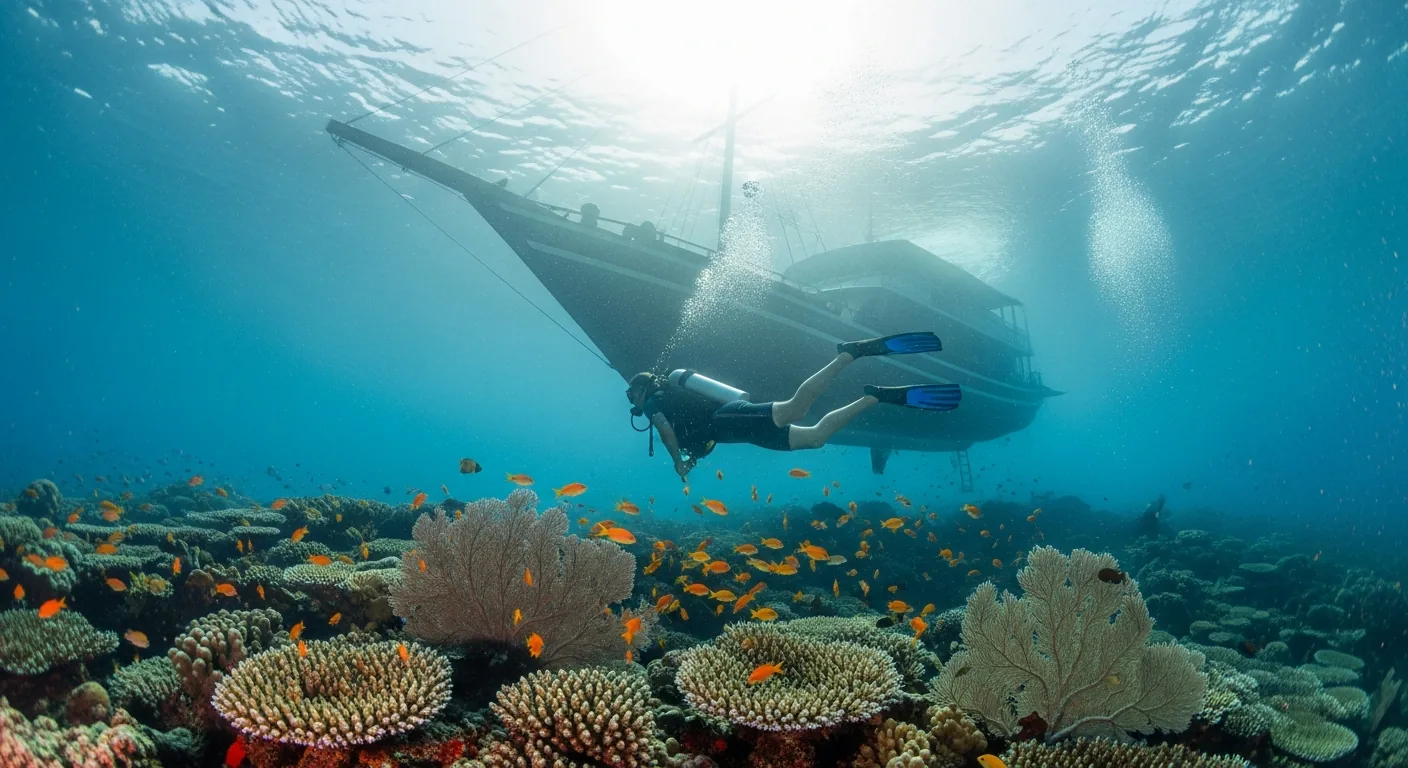
The current descends with purpose at Cape Kri. Below, a sloping reef wall explodes with a density of life that recalibrates one’s understanding of a marine ecosystem. Schools of yellow-fin barracuda, numbering in the hundreds, form a shimmering vortex while five distinct species of pygmy seahorse cling to gorgonian fans. It was here, on a single 60-minute dive, that Dr. Gerald R. Allen recorded 374 distinct fish species for Conservation International in 2012. This is the quantitative reality of Raja Ampat, a standard that makes selecting the correct diving package a critical decision. The question for the discerning diver is not if you will witness this spectacle, but how. The logistical complexities and vast price spectrum, from a basic homestay to a fully-crewed phinisi yacht, can be as intricate as the reef systems themselves.
This guide deconstructs the financial and experiential components of a Raja Ampat dive trip. We move beyond brochures to provide a transparent analysis of what your investment secures, from guide ratios and nitrox availability to the specific archipelagos your itinerary can access. For the advanced certified diver, choosing a package is a matter of aligning your priorities—be they photographic pursuits in Misool’s soft coral gardens or high-voltage drift dives in the Dampier Strait—with the appropriate platform and operational expertise. See also: Raja Ampat Diving Package About.
Understanding the Core Components of a Raja Ampat Dive Package
Before examining specific price brackets, it is essential to understand the non-negotiable costs and key variables that structure any raja ampat diving package. The final price is an aggregate of several critical elements, each influencing the quality and scope of your expedition. Misinterpreting these can lead to a significant disconnect between expectation and reality. The primary cost drivers include the mode of accommodation (liveaboard vs. resort), the duration of the trip, the region of focus, and the level of service.
Fundamental costs begin before you even reach the water. Domestic flights from Jakarta (CGK) or Bali (DPS) to Sorong (SOQ), the gateway to the archipelago, typically range from $400 to $700 USD return on carriers like Garuda Indonesia or Batik Air. Upon arrival in Sorong, every visitor must purchase the Raja Ampat Marine Park Entry Permit (known as a PIN or KJL), which costs IDR 1,000,000 (approximately $65-70 USD) and is valid for 12 months. This fee directly funds conservation and community projects within the park. Beyond these fixed costs, the package price will encompass your accommodation, a set number of dives (typically 3-4 per day), tanks, weights, and the expertise of a dive guide. Variables that escalate the cost include private guide services, equipment rental (a full set can average $40 USD per day), nitrox fills (often included in mid to high-end packages), and any land-based excursions. See also: Raja Ampat Diving Package.
The Budget-Conscious Approach: Homestays and Basic Liveaboards (Under $3,500)
For the diver prioritizing immersion and bottom time over creature comforts, the budget-tier provides a viable, if rustic, entry point. This category is dominated by land-based homestays, particularly around the islands of Kri and Gam, and a small fleet of more basic, Indonesian-owned liveaboards. A typical 8-day/7-night raja ampat dive package in this range will fall between $1,800 and $3,500 per person. Accommodation is simple: expect bamboo bungalows with fans, shared bathroom facilities, and meals served communally. The diving operation is similarly straightforward. You will likely dive from a small, open-air fibreglass boat with a local guide whose knowledge of the immediate reefs is profound.
The trade-offs are tangible. The operational range is limited, confining your dives to sites within a 30-60 minute boat ride from the homestay. This means accessing the far-flung, pristine reefs of southern Misool from a Dampier Strait homestay is not feasible. The guide-to-diver ratio may be higher, and specialized services like dedicated camera rinse tanks or nitrox are uncommon. According to local divemaster, Ismail Hasan, “The homestay experience is authentic. You are close to the culture and the reefs. But you must be an independent, adaptable diver. The schedule is flexible, sometimes too flexible.” This approach is best suited for experienced, self-sufficient divers on an extended trip who value cultural connection and are willing to forgo the structured amenities of a dedicated dive operation. See also: explore Contact.
The Mid-Range Expedition: Boutique Resorts and Reputable Liveaboards ($3,500 – $6,500)
This segment represents the most popular and balanced option for a comprehensive raja ampat liveaboard package or resort stay. It offers a significant step up in comfort, service, and operational capability without reaching the exclusive pricing of a private charter. In this bracket, you find established dive resorts like Papua Explorers and Kri Eco Resort, as well as a wide range of well-regarded steel-hulled or wooden phinisi liveaboards such as the Indo Siren or the Ambai. An 8 to 11-day trip typically costs between $4,000 and $6,500 per person.
The key differentiators are professionalization and amenities. Resorts in this category feature private, air-conditioned overwater bungalows, excellent cuisine, and PADI 5-star dive centers with dedicated camera rooms. Liveaboards offer comfortable en-suite cabins, hot water showers, and spacious dive decks. Nitrox is often included free of charge for certified divers. The dive program is highly structured, with 3-4 guided dives per day, and the itineraries are designed to showcase a diversity of sites across a wider region, such as a “Best of Raja Ampat” route covering both the Dampier Strait and parts of Misool. A raja ampat resort dive experience provides a comfortable base, while a liveaboard offers the distinct advantage of mobility, waking up at a new, world-class dive site each morning. This tier is the optimal choice for most serious divers seeking a high-quality, efficient, and comfortable platform to explore the heart of the Coral Triangle.
The Luxury Charter: Private Yachts and Premier Resorts (Over $7,000)
At the apex of Raja Ampat travel are the exclusive resorts and private charter vessels that offer an exceptional level of service, privacy, and customization. This is the domain of premier land-based operations like Misool Eco Resort, which operates within its own 300,000-acre marine reserve, and bespoke phinisi yachts like the Prana by Atzaró or the expedition vessel Aqua Blu. Per-person costs for a scheduled 8-10 day trip start around $7,500 and can exceed $15,000. A full private charter for a vessel like the Aqua Blu, which accommodates up to 30 guests in 15 suites, can range from $180,000 per week.
This investment secures an unparalleled experience. On a private charter, the itinerary is entirely fluid, dictated by the guests’ interests in consultation with the cruise director and captain. Want to spend three days searching for the perfect shot of a walking shark? It can be arranged. Dive guide ratios are often 2:1 or even 1:1. Onboard amenities rival luxury hotels, with fine dining, spa services, and non-diving activities like kayaking and island trekking. Resorts like Misool offer a profound connection to conservation, where your stay directly funds their extensive ranger patrols and community programs. A raja ampat dive trip at this level is less a vacation and more a private, curated expedition into one of the last truly wild marine frontiers on Earth. It is for those who value ultimate flexibility, privacy, and the highest standards of service.
Cost and Feature Comparison: Raja Ampat Dive Packages
| Feature | Budget Package | Mid-Range Package | Luxury Package |
|---|---|---|---|
| Price Range (7-9 nights) | $1,800 – $3,500 USD | $3,500 – $6,500 USD | $7,000 – $15,000+ USD |
| Accommodation Type | Basic Homestay / Basic Liveaboard | Boutique Resort / Phinisi Liveaboard | Premier Resort / Private Yacht Charter |
| Amenities | Fan cooling, shared facilities | A/C, en-suite bathroom, camera room | Fine dining, spa, private balconies |
| Dive Guide Ratio | 1 guide to 5-6 divers | 1 guide to 4 divers | 1 guide to 2 divers (or 1:1) |
| Key Itinerary Focus | Localized (e.g., Dampier Strait only) | Regional (e.g., North & Central) | Fully customized, remote exploration |
| Best For | Self-sufficient, budget-focused divers | Most certified divers seeking comfort and value | Discerning travelers seeking exclusivity and privacy |
Itinerary Deep Dive: North (Dampier Strait) vs. South (Misool)
Choosing between Raja Ampat’s primary dive regions is a critical decision that your package type will heavily influence. The Northern region, centered around the Dampier Strait, is the most accessible from Sorong and is famed for its sheer biomass and powerful currents. This is where you find iconic sites like Cape Kri, Blue Magic, and Manta Sandy. The diving is characterized by massive schools of fish, encounters with oceanic manta rays (Mobula alfredi), and high-octane drift dives. Most land-based resorts and shorter liveaboard trips (7-8 nights) concentrate their efforts here.
The Southern region, primarily the Misool archipelago, requires a longer sea journey and is typically only accessible via liveaboard on trips of 9 nights or more, or by staying at the remote Misool Eco Resort. The investment in time and cost is rewarded with a different, though equally spectacular, underwater environment. Misool is the global epicenter of soft coral diversity. The topography features dramatic limestone karsts, underwater caves, and swim-throughs, all draped in a riot of color. The reefs here are considered some of the most pristine on the planet, protected by the resort’s private marine reserve. A comprehensive raja ampat liveaboard package of 10-12 nights will often attempt a “crossing” itinerary to include the highlights of both North and South, offering the most complete survey of the region’s biodiversity. The optimal diving season for both regions is from October through April, when the seas are calmest and visibility is at its peak, often exceeding 30 meters.
Finalizing Your Raja Ampat Dive Trip with an Expert
Navigating the options for a raja ampat diving package requires specialist knowledge. The choice between a resort and a liveaboard, or an itinerary focused on the Dampier Strait versus Misool, has significant implications for your experience. An expert can interpret your personal diving style, photographic ambitions, and comfort requirements to align you with the ideal operator and vessel.
At Raja Ampat Diving Package, we curate expeditions for serious divers. We maintain direct relationships with the region’s most reputable operators, from the boutique phinisis to the premier eco-resorts. Our process involves a detailed consultation to determine the precise elements that will define your trip. We handle the complex logistics, from securing domestic flights on your preferred dates to ensuring your dietary requirements are communicated to the chef and your nitrox blend is ready on the dive deck. See also: Resort Vs Liveaboard.
Your next step is to translate this information into a tangible plan. Consider the following action items:
- Define Your Timeframe: The best itineraries, particularly for Misool, require 9 nights or more. Determine your available travel window between October and April.
- Assess Your Priorities: Are you focused on pelagic action and big fish schools (Dampier Strait), or intricate macro life and soft corals (Misool)?
- Establish Your Budget: Use the price brackets outlined above to establish a realistic budget for your preferred travel style.
- Consult an Expert: Contact our team to discuss your specific interests. We can provide current availability, detailed vessel specifications, and sample itineraries that match your criteria.
A trip to Raja Ampat is a significant investment in your passion for diving. Let us ensure it delivers. Contact our specialists to begin designing your bespoke Raja Ampat dive package.