The Definitive Guide to Your Raja Ampat Diving Package: October-April Conditions
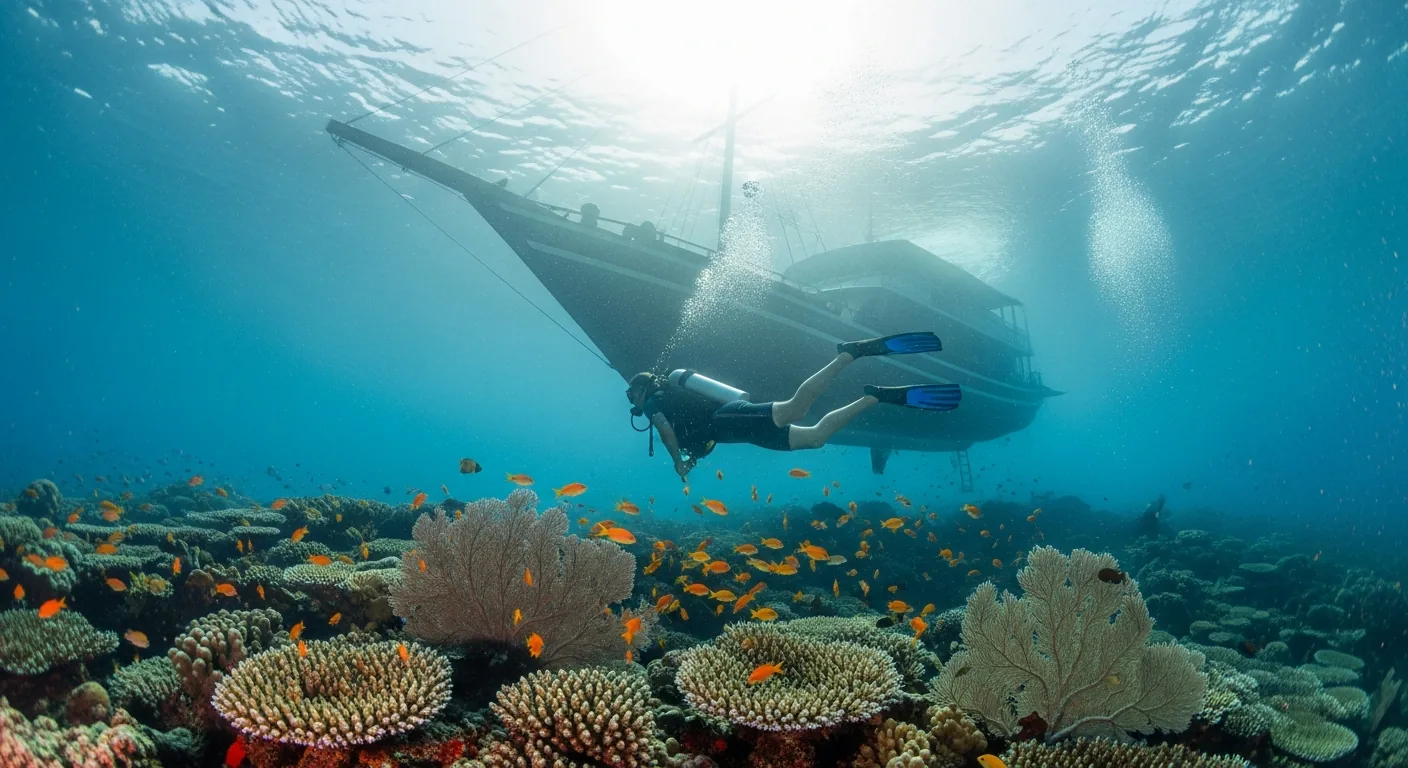
The drop is a descent into another state of being. As you leave the humid Papuan air behind, the water envelops you, a consistent 29°C embrace. Below, the reef slope at Cape Kri does not gradually reveal itself; it explodes into existence. Schools of fusiliers, numbering in the thousands, create shimmering, fluid curtains that part to reveal blacktip reef sharks patrolling the edge of the visibility. The sheer density of life is a sensory overload, a challenge to process. This is the central question for the discerning diver: not if you should go to Raja Ampat, but how to calibrate your expedition to experience it at its most profound. See also: book Resort Vs Liveaboard.
The archipelago of over 1,500 islands sits at the biological epicenter of the planet. Planning a raja ampat dive trip here is a logistical exercise that demands precision. The vastness of the area, combined with the seasonal shifts in currents and conditions, means that timing is everything. For those with Advanced Open Water certification and a portfolio of global dive experiences, the goal is to align your visit with the period of maximum clarity and marine activity. This guide is engineered to provide that alignment, focusing on the prime diving window from October through April and detailing the strategic choices that define a successful expedition.
Decoding the Prime Season: Why October to April is the Standard for Raja Ampat Diving
The rhythm of Raja Ampat is dictated by two monsoons. The period from late May to September is governed by the southeast monsoon, which can bring stronger winds and surface chop, particularly to the central and northern regions, including the famed Dampier Strait. While diving is possible, conditions can be less predictable. Come October, the meteorological pattern shifts. The northwest monsoon begins, ushering in a period of calmer seas and, critically, improved underwater visibility. This is the season that has cemented Raja Ampat’s reputation. See also: book Contact.
During these seven months, from October to April, the underwater environment becomes remarkably stable. Water temperatures hold steady between 28-30°C (82-86°F), allowing for comfortable, extended dives in a 3mm wetsuit. More importantly, visibility frequently extends to 30 meters (100 feet), creating ideal conditions for wide-angle photography and for appreciating the grand scale of the region’s reefs. The calmer surface also makes for more comfortable crossings between islands, a crucial factor for any raja ampat liveaboard package. While plankton blooms can occur, particularly toward the end of the season in March and April, they are a strategic trade-off. These blooms attract filter feeders, increasing the probability of encounters with oceanic manta rays and even the occasional whale shark. A well-planned raja ampat diving package is built around this specific, highly productive window.
The Regional Breakdown: A Month-by-Month Visibility and Marine Life Guide
While the October-to-April window is the general rule, conditions and marine life encounters evolve month by month. Understanding these nuances allows for a more tailored raja ampat dive package. According to veteran expedition leader Marco Dubois, who has charted these waters for over 15 years, “Clients often ask for the single ‘best’ month. The truth is, it’s a conversation about priorities. Do you want the gin-clear water of December for photography, or the manta congregations of November and March? Each month offers a slightly different character.” This micro-level planning separates a standard trip from a meticulously crafted one.
The following table provides a framework for aligning your travel dates with your diving objectives:
| Period | Average Visibility | Water Temperature | Marine Highlights | Considerations |
|---|---|---|---|---|
| October – November | 20-30 meters | 28-29°C | Start of manta ray season at Manta Sandy. Excellent fish schooling behavior. Wobbegong sharks are highly active. | The beginning of the season means fewer vessels. An excellent balance of great conditions and less traffic. |
| December – February | 25-35 meters | 28-30°C | Peak clarity, ideal for wide-angle reefscapes. High diversity of pelagic and reef fish. Consistently calm seas. | This is peak season. Book any raja ampat liveaboard package 12-18 months in advance. Prices are at a premium. |
| March – April | 15-25 meters | 29-30°C | Increased plankton can attract oceanic mantas and whale sharks. Coral spawning events possible around the full moons. | Visibility can be slightly reduced but megafauna encounters increase. The season’s end offers superb value. |
This data-driven approach ensures your investment in a raja ampat dive trip yields the highest possible return in terms of underwater experience. For example, a photographer targeting the intricate detail of the Boo Windows rock formation in Misool would favor the crystalline conditions of January, while a diver focused on large pelagics might select a late-season trip in March.
The Liveaboard Advantage: Maximizing Your Dive Time in the Prime Season
For the committed diver, the geography of Raja Ampat makes a compelling case for a sea-based expedition. The most celebrated dive regions—the Dampier Strait in the north and the Misool archipelago in the south—are separated by more than 150 kilometers of open water. A raja ampat liveaboard package is the most efficient, and arguably the only, way to comprehensively experience the diversity of both. These purpose-built vessels act as mobile dive platforms, eliminating hours of daily transit time from a land base and positioning divers over remote sites at optimal times, such as sunrise or sunset.
A typical 10-night northern itinerary might focus on the Dampier Strait, home to sites where currents can exceed 3 knots. Here, at places like Blue Magic and Sardine Reef, you can deploy a reef hook and watch a staggering procession of marine life. The expedition can then push further to the Wayag Islands for their iconic karst landscapes. A southern itinerary, by contrast, immerses you in the soft coral gardens of Misool, a 300,000-acre marine reserve where conservation efforts have yielded spectacular results. A comprehensive raja ampat dive package covering both north and south requires a minimum of 12 nights.
- Access to Remote Sites: Dive locations like the Far Out Rock in Misool or the isolated northern islands are inaccessible to day boats.
- Optimized Dive Schedules: Conduct up to four dives per day, including crepuscular and night dives, timed to coincide with peak animal activity.
- Logistical Simplicity: All tanks, weights, meals, and accommodations are consolidated. Nitrox is often available for a supplementary fee, typically around $150 USD for a 10-day trip.
The investment for a premium 10-night raja ampat liveaboard package generally falls between $5,500 and $8,000 USD per person, reflecting the vessel’s quality, the itinerary’s scope, and the level of onboard service. This is the definitive method for those who prioritize maximizing bottom time across the broadest possible geographic range.
The Resort-Based Expedition: A Focused Approach to Raja Ampat Dive Trips
While liveaboards offer range, a land-based raja ampat resort dive package provides a different, more focused form of immersion. The strategy here is to select a resort that serves as a high-quality base camp for exploring a specific, world-class sub-region. Resorts on islands like Kri, Gam, or Waigeo are strategically positioned within a short boat ride of dozens of premier dive sites in and around the Dampier Strait. This option appeals to divers who prefer a more relaxed pace, wish to integrate cultural or terrestrial activities, or are traveling with non-diving partners.
A high-caliber dive resort in this area will offer a dedicated dive center with multiple boat departures per day. Many, like those on Kri Island, have phenomenal house reefs where divers can log unlimited, independent dives just steps from their bungalow. This allows for an exceptionally flexible schedule. You could spend the morning diving the legendary Cape Kri, where Dr. Gerald R. Allen documented a record 374 fish species on a single tank, and the afternoon kayaking through mangrove forests. The key is a deep exploration of one area rather than a survey of many. A 7-night raja ampat resort dive package with 10-12 guided boat dives typically costs between $4,000 and $6,000 USD, inclusive of accommodation and meals.
Comparison: Liveaboard vs. Resort Dive Package
- Pace: Liveaboards are itinerary-driven and intensive. Resorts allow for more flexibility and downtime.
- Dive Diversity: Liveaboards offer superior geographical and ecological diversity. Resorts provide deep, repetitive exploration of a specific, high-quality zone.
- Experience: A raja ampat liveaboard package is a pure diving expedition. A resort stay can be a more rounded tropical holiday that includes exceptional diving.
- Social Dynamic: Liveaboards foster a communal environment with a small group of fellow divers. Resorts offer more privacy and personal space.
Navigating the Epicenters: Dampier Strait, Cape Kri, and Misool
To plan a superior raja ampat diving package, one must understand the distinct personalities of its core regions. These are not interchangeable dive areas; each offers a unique underwater topography and marine ecosystem, demanding specific dive skills and rewarding in different ways.
The Dampier Strait: This channel separating the islands of Waigeo and Batanta is a veritable superhighway for marine life. Nutrient-rich waters from the Pacific Ocean are funneled through the strait, creating powerful currents that can be challenging but are the engine of its biodiversity. Sites like Blue Magic, a submerged pinnacle, attract immense schools of barracuda, jacks, and grey reef sharks. At Manta Sandy, a cleaning station at a depth of 15 meters, reef mantas gather in numbers between October and April for grooming by wrasses. Advanced certification and experience in currents are prerequisites for diving here.
Cape Kri: Located at the eastern tip of Kri Island, this site is the very definition of biomass. It is a sloping reef where the convergence of currents has created an environment of almost unbelievable fecundity. The sheer volume of fish can be disorienting. It is not a site for spotting one specific thing, but for absorbing the spectacle of a reef functioning at maximum capacity. The record-breaking fish count from 2012 still stands as a testament to its ecological significance.
Misool: The southern archipelago is a different world. Protected by the Misool Marine Reserve, a no-take zone established over a decade ago, the reefs here are pristine. The area is renowned for its kaleidoscopic soft corals and dramatic topography of swim-throughs and overhangs, exemplified by the Boo Windows site. Magic Mountain is a pinnacle known for hosting both oceanic and reef manta rays simultaneously. Accessing Misool almost exclusively requires a liveaboard, and visitors must pay a Misool Marine Reserve fee of approximately IDR 1,000,000 (about $65 USD) in addition to the general park permit.
Planning and Logistics for Your Raja Ampat Dive Package
A successful expedition to this remote corner of West Papua hinges on meticulous advance planning. The journey itself is an undertaking, and arriving prepared is essential. See also: Raja Ampat Diving Package Home.
- Getting There: The gateway to Raja Ampat is the city of Sorong (SOQ). International travelers will typically connect through Jakarta (CGK) or Makassar (UPG). From Sorong, your liveaboard will depart directly, or you will take a 2-hour ferry to Waisai, the capital of the Raja Ampat Regency, for transfer to a resort.
- Permits and Fees: All visitors entering the marine park must purchase a Raja Ampat Marine Park Permit (known as a PIN). The cost is IDR 1,000,000 (approximately $65 USD) and is valid for 12 months. This fee directly funds conservation and community programs.
- Essential Gear: Beyond standard dive equipment, a reef hook is non-negotiable for many sites in the Dampier Strait. A surface marker buoy (SMB) and a dive computer are mandatory on all reputable operations. Given the potential for multiple deep dives per day, Nitrox certification is highly recommended to extend bottom time and reduce surface intervals.
- Booking Horizon: The best liveaboards and resorts are often fully booked for the October-April peak season more than a year in advance. We advise beginning the conversation with a specialist 12 to 18 months before your intended travel dates to secure your preferred vessel and itinerary.
The currents of the Dampier Strait and the pristine reefs of Misool represent the pinnacle of underwater exploration. The window between October and April provides the most reliable and rewarding conditions for a comprehensive raja ampat dive trip. To secure your place in the world’s most biodiverse waters during this optimal season, a conversation with our specialists is the necessary first step. We can calibrate the details of your expedition, from selecting the right liveaboard to crafting a resort-based stay that aligns perfectly with your objectives.
Contact our expedition planning team to begin designing your Raja Ampat diving package.
Brand: Raja Ampat Diving PackagePhone: 0811-3941-4563
Email: bd@juaraholding.com
Office: Jalan Sunset Road No. 88, Kuta, Badung, Bali 80361
Related: Raja Ampat Diving Package About.